Case Study Yellow-Cat
Case Study - Overview
Yellow Cat is an application designed to help people who shop excessively and constantly. The objective of this application is to help users reduce the anxiety caused by not being able to buy. Using a shopping simulation, which sends stimuli to help you satisfy your need to buy.
Roles
Project Management
UX UI Designer
UX UI Designer
Tools
Figma
FigJam
Google
Problem
In Mexico, there is no culture of saving, on average Mexicans, in 2023, spent monthly the amount of 10,500 Mexican pesos, in virtual purchases. This leads us to think that every day it is more and more common to buy compulsively in marketplaces.
The current user experiences a social problem, since in Mexico in 1997 a reform to the labor pension was carried out, forcing people to save independently through Afores, Investments, and informal saving methods. However, surveys conducted by Yellow Cat show that the majority of users do not know how to save or are unaware of the subject and do not know about savings tools.
One of the main reasons for not saving is excessive online shopping.
Users of the new generations do not have a savings culture, they do not know how savings and investment applications work, therefore, they do not have a savings cushion for family emergencies, medical, housing, accidents, and unforeseen events. Yellow Cat aims to help this part of the population, instead of spending 10,500 pesos a month on virtual shopping sites, to save them through a shopping simulation app.
Goals
That the user can satisfy his need to buy, using fictitious purchases, without the need to spend money.
The user should be aware that compulsive spending is not always the best option.
The user visits online shopping apps less and less often
Analysis
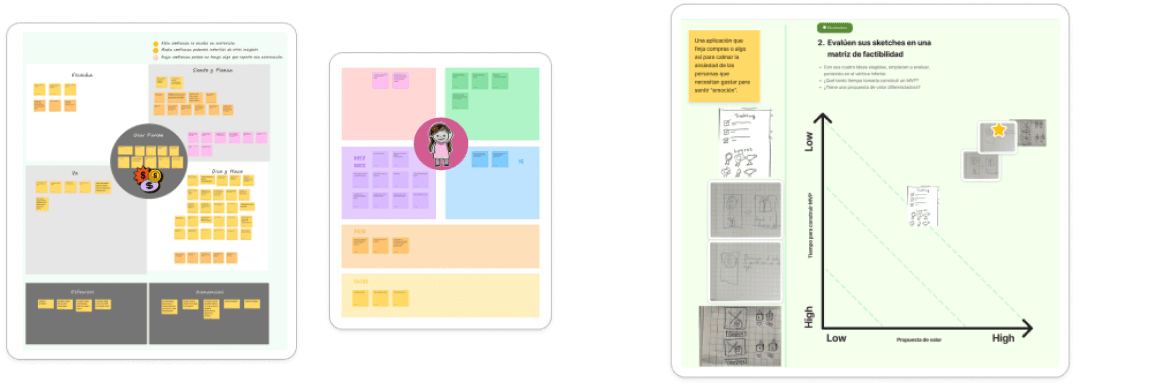
Design Thinking is a methodology that allows the use of tools such as HMW, which are used to pose questions, without giving the user an answer, but giving him the freedom to give a solution to the problem. It is applied in the Empathy Map, Card Sorting, Affinity Map, Ideation sessions, and Crazy 8, to look for creative alternatives that help us to get out of the conventional answers and generate creative proposals that stimulate the user. Based on the feasibility matrix, we went for an application that showed the user the feelings generated by each interaction, this was applied within the app, through emotional messages that arouse feelings of interest in the user.
Persona
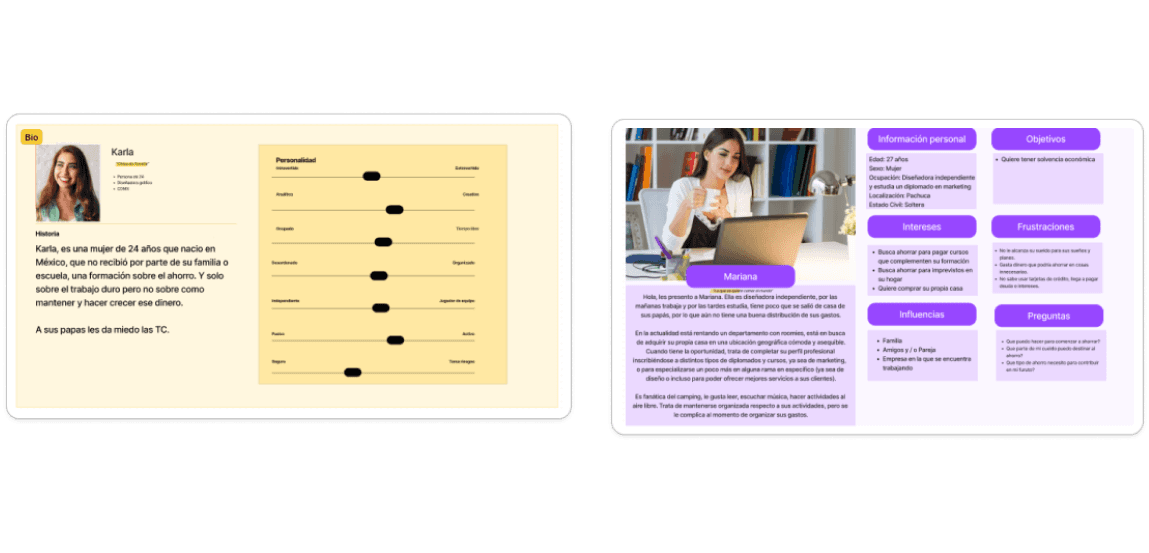
MARIANA: She is a designer, a fan of reading and doing outdoor activities, lives independently, rents with rommies, she is looking to buy her own house; However, she has no savings and has financial problems, which makes Mariana an ideal User Persona for Yellow Cat. KARLA: Designer, with no knowledge of savings, does not know how to make her money grow and is afraid of using Credit Cards, which makes Mariana an ideal User Persona for Yellow Cat.
Implementation of findings
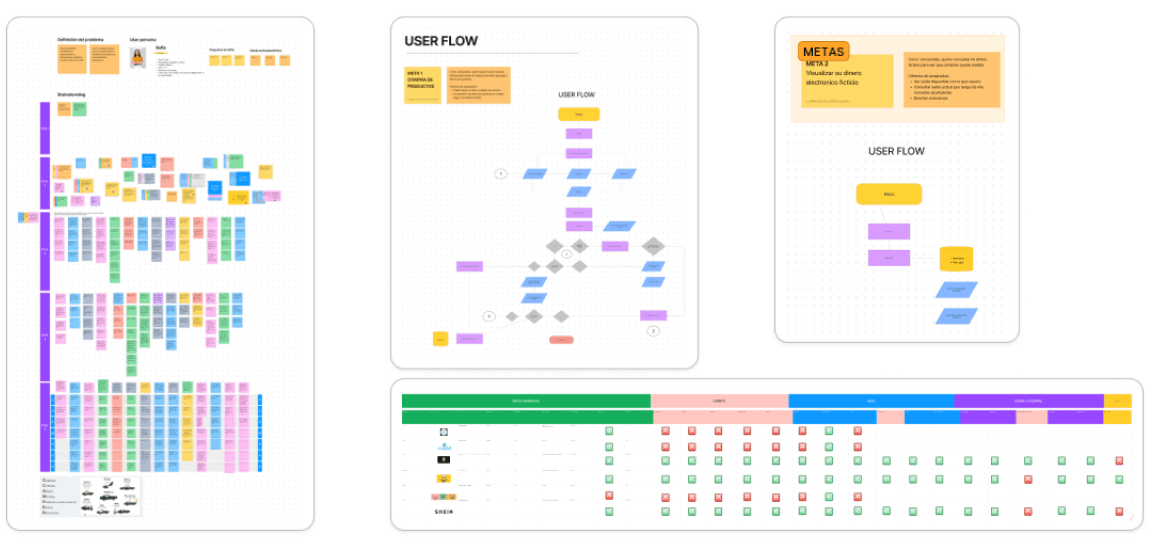
IDEATION: Definition of the problem, creation of needs, and expectations of the user person based on Karla and Mariana's user story.
BRAINSTORMING: It is made up of 5 levels of ideation, with creative solutions that are mixed.
SCAMPER: replace, combine, adapt, modify, present to other users, etc., through techniques that modify the idea and allow the generation of creative content for users. Yellow Cat, was born with the implementation of "Rearrange"
BENCHMARK: competition analysis, where it was defined that in Mexico, there is no app that is a shopping simulator to reduce anxiety, like Yellow Cat; However, we analyze the purchasing behavior of applications such as; Shein, Rootd, Amazon, Ynab and Mercado Libre, which allowed us to see their behavior, to carry out the User Flow.
USER FLOW: has a home page, recommendations, Catalog, Cart, Addresses, Payment, and shipping methods.
Card Sorting: List of categories and functionalities, based on the user flow, this is done so that the user can group categories of cards and thus give logic to the Yellow Cat flow, for this project 46 cards were used.
Optimal Workshop: allows the user to group the project cards logically and step by step, helps determine if users have problems with their application, in this case, 21 participants completed the sample, 8 completed the tasks completely, It took an average of 14.4 minutes to solve the dynamics and all its participants are Mexican, Optimal gave us a dendrogram, which allowed us to improve the arrangement of the User Flow, which allowed us to increase the flow that began with 4 categories to 8.
Wireframes
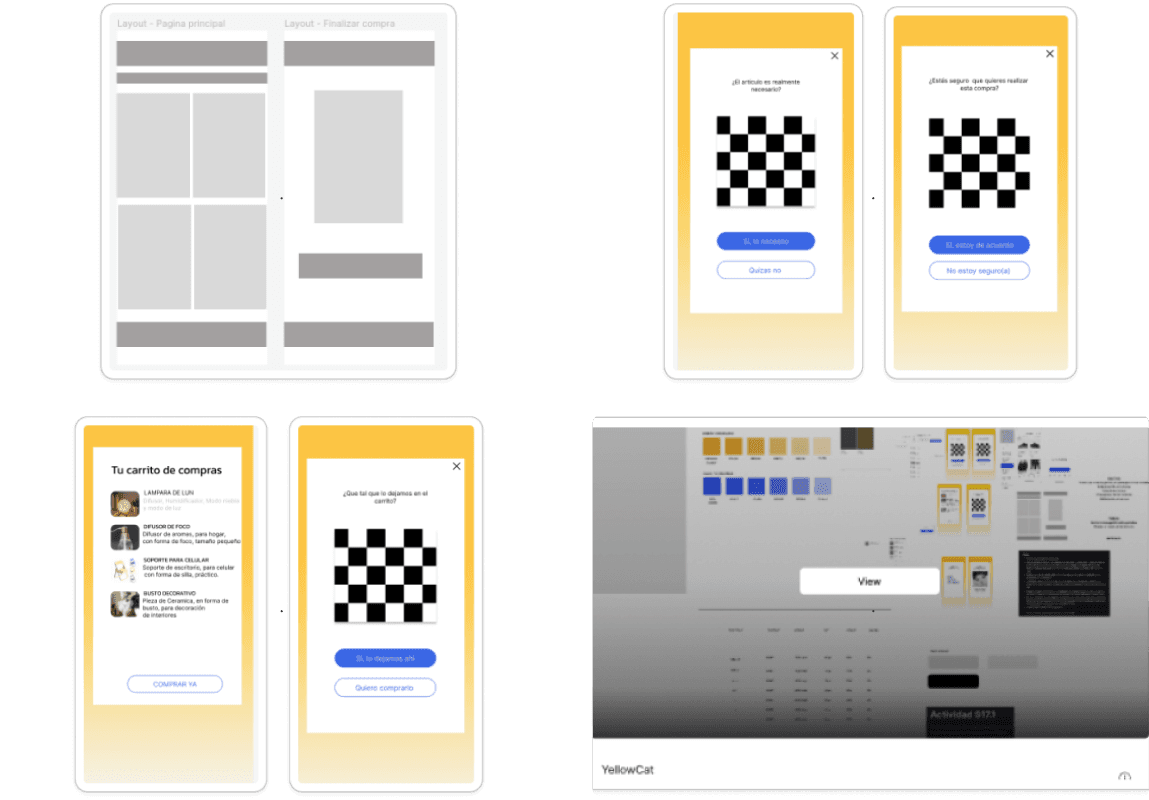
Interface design for mobile application, with implementation of 2 columns, oriented on the categories of the dendrogram, resulting in the final purchase flow.
Interface design
Home Screen
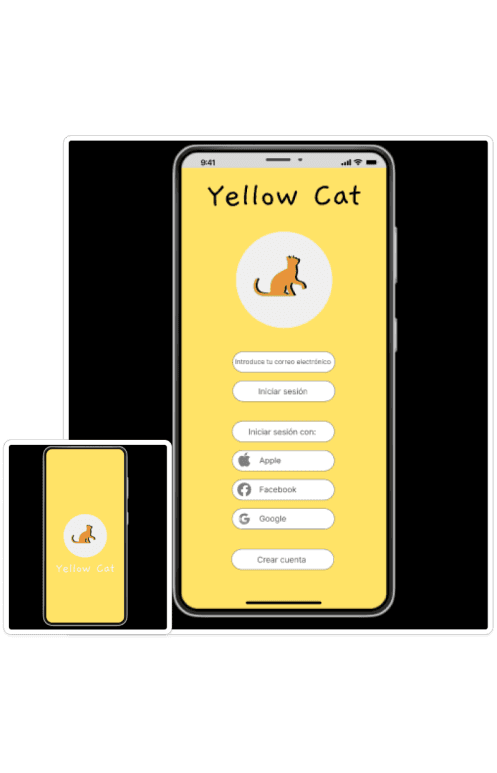
Yellow Cat, associates in its design the yellow cat, with a fun, naughty and restless character, and the color used, evokes in its negative meaning, the anxiety caused by wanting to buy more and more, and in its positive meaning, it evokes happiness and that desire. Wanting to continue with more, in this case, is associated with wanting to continue in the shopping simulation app.
The User Page shows the user the Yellow Cat navigation options, allows the user to log in with Google, Apple, and Facebook, or the basic option of creating an account from scratch.
Description General
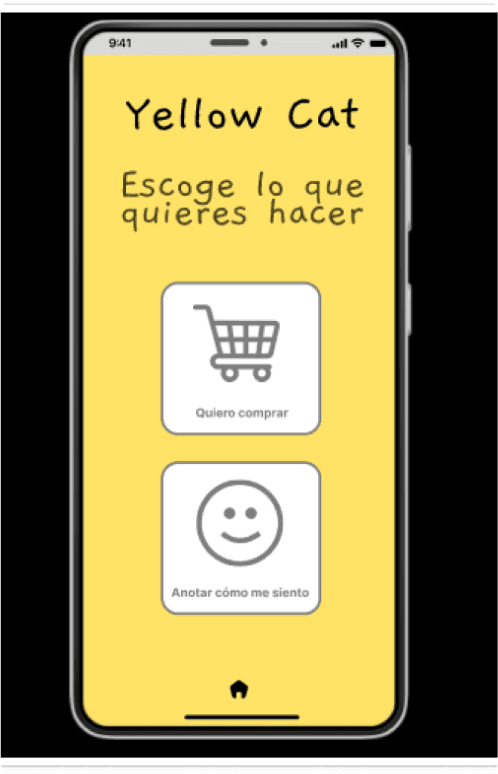
Shortcuts, menu, and home are designed to give the user two simple options, by first continuing with the purchase or going to the feelings zone, to see if the user is experiencing shopping desires due to anxiety. And thus help you with calming messages.
Purchase validation
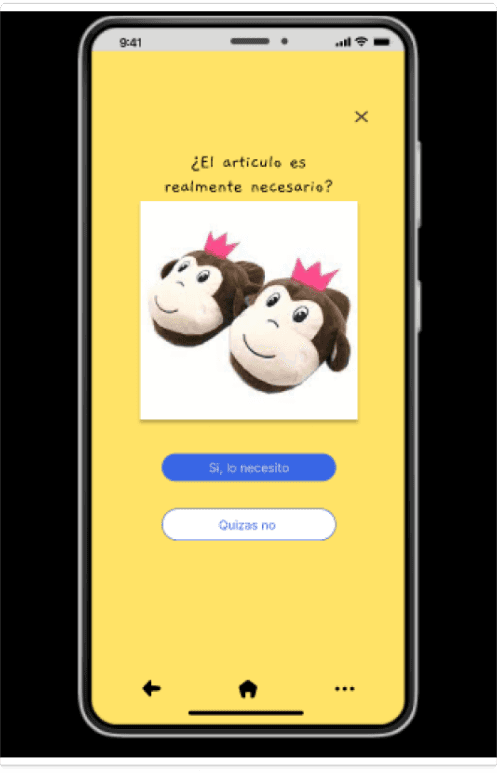
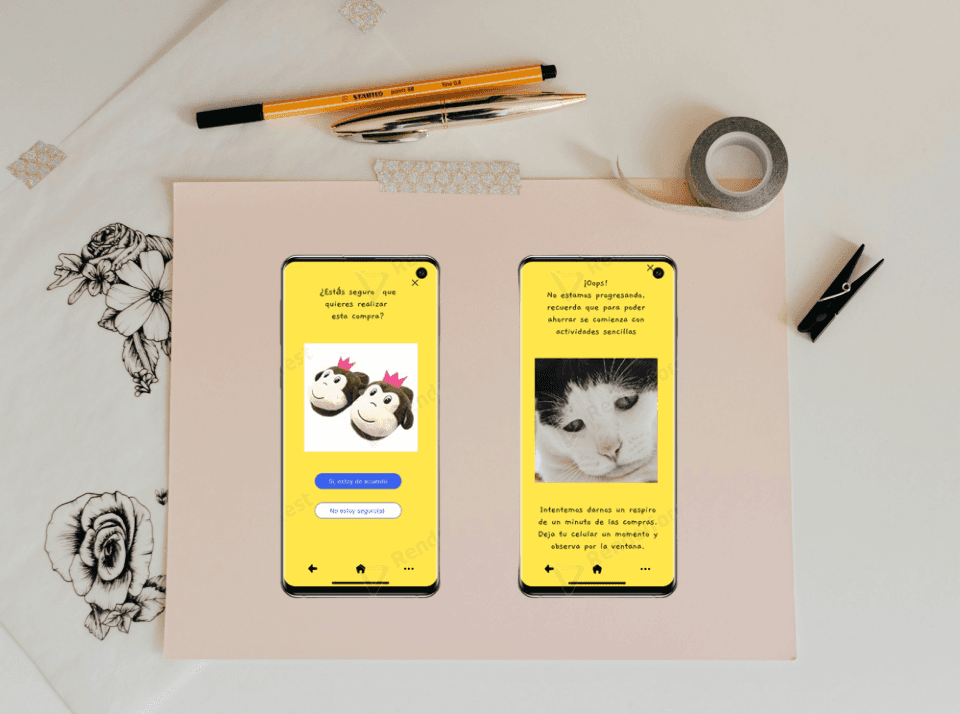
Once the user has selected the item they wish to purchase, but before proceeding to make said purchase, they will be asked if the item is indeed necessary. Here, trying to encourage the user to make a ratification for its possible acquisition.
Research feedback
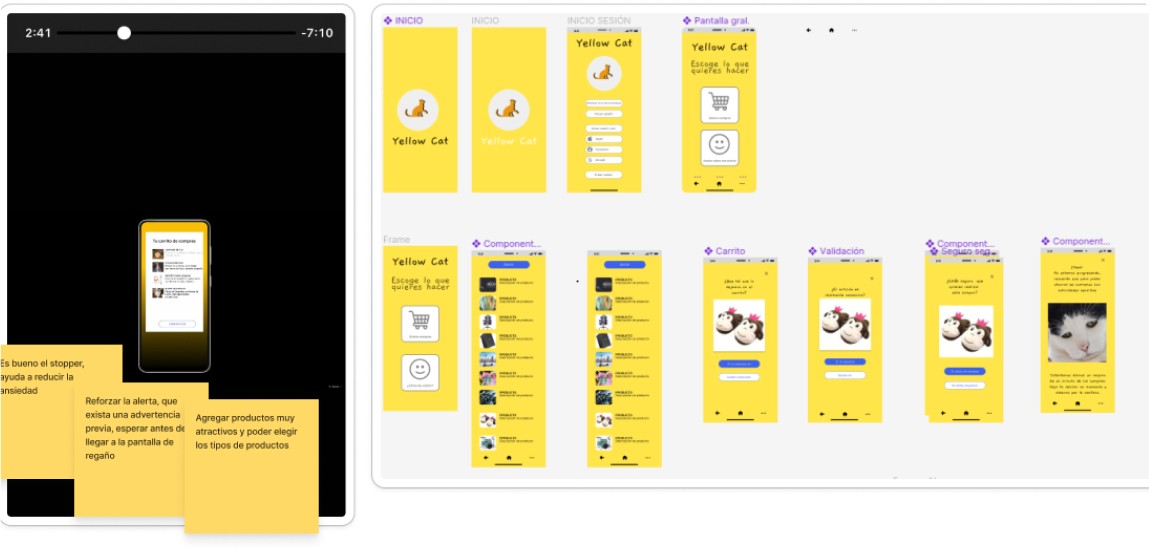
The usability test was carried out on 5 users, from whom a lot of feedback was received, from which improvements arose that were taken into account to improve essential parts of the experience of our users. The majority of users were able to complete all the proposed tasks, finishing them on time and without any difficulty, feeling that the app meets the objective of reducing anxiety when trying to buy a product.
Conclusion
Our Yellow Cat project was essential to create and discover how to help a user who is anxious about shopping, especially if he doesn't do it. We managed to discover all this in the definition of our user, investigating more and more, but without losing our main problem, about the lack of awareness of savings in the majority of the population in Latin America and at the same time taking into account the needs of our user. Yellow Cat represented a great challenge, since when analyzing the competition there was nothing similar in the market, but we were able to find a point in our favor, by creating something new that could solve some of the many problems present regarding savings. By focusing on a flow, we were able to create a structured and easy-to-understand design, improving the user experience in their interaction within the Yellow Cat application.